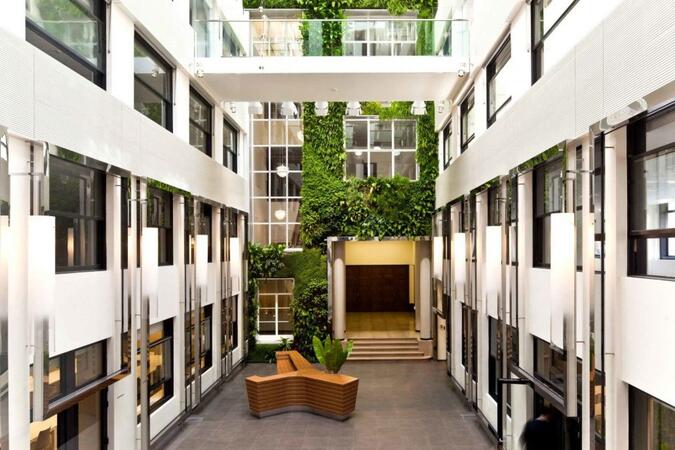
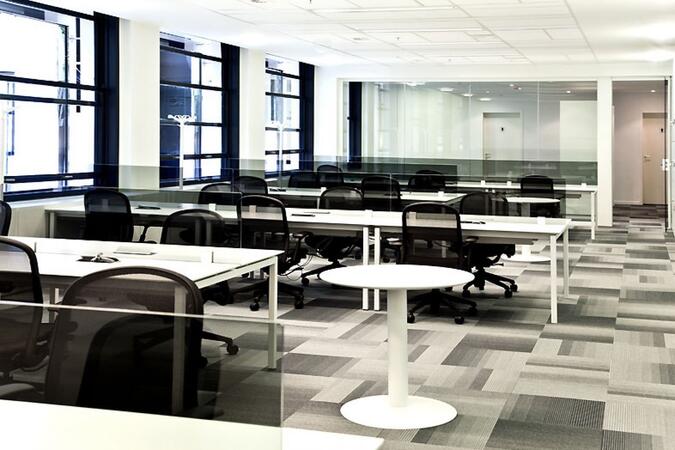
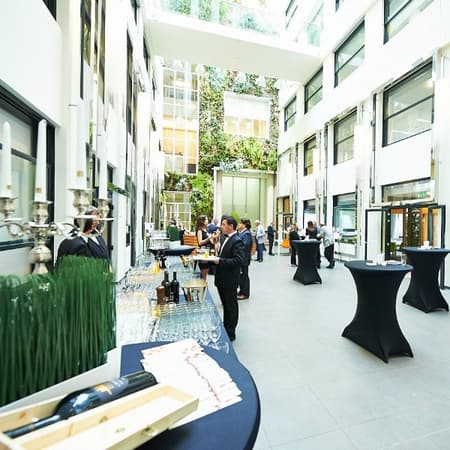
Business Center Copernico Science14, Rue de la Science 14, Brussels, Belgium, 1040
Most of the European Union's Brussels-based institutions are located within its European Quarter, which is the unofficial name of the area corresponding to the approximate triangle between Brussels Park, Cinquantenaire Park and Leopold Park (with the European Parliament's hemicycle extending into the latter). The Commission and Council are located in the heart of this area near to the Schuman station at the Schuman roundabout on the Rue de la Loi. The European Parliament is located over the Brussels-Luxembourg station, next to Luxembourg Square.
The area, much of which was known as the Leopold Quarter for much of its history, was historically residential, an aspect which was rapidly lost as the institutions moved in, although the change from a residential area to a more office oriented one had already been underway for some time before the arrival of the European institutions. Historical and residential buildings, although still present, have been largely replaced by modern offices. These buildings were built not according to a high quality master plan or government initiative, but according to speculative private sector construction of office space, without which most buildings of the institutions would not have been built. However, due to Brussels's attempts to consolidate its position, there was large government investment in infrastructure in the quarter. Authorities are keen to stress that the previous chaotic development has ended, being replaced by planned architecture competitions and a master plan. Architect Benoit Moritz has argued that the area has been an elite enclave surrounded by poorer districts since the mid-19th century, and that the contrast today is comparable to an Indian city. However, he also said that the city has made progress over the last decade in mixing land uses, bringing in more businesses and residences, and that the institutions are more open to "interacting" with the city.